


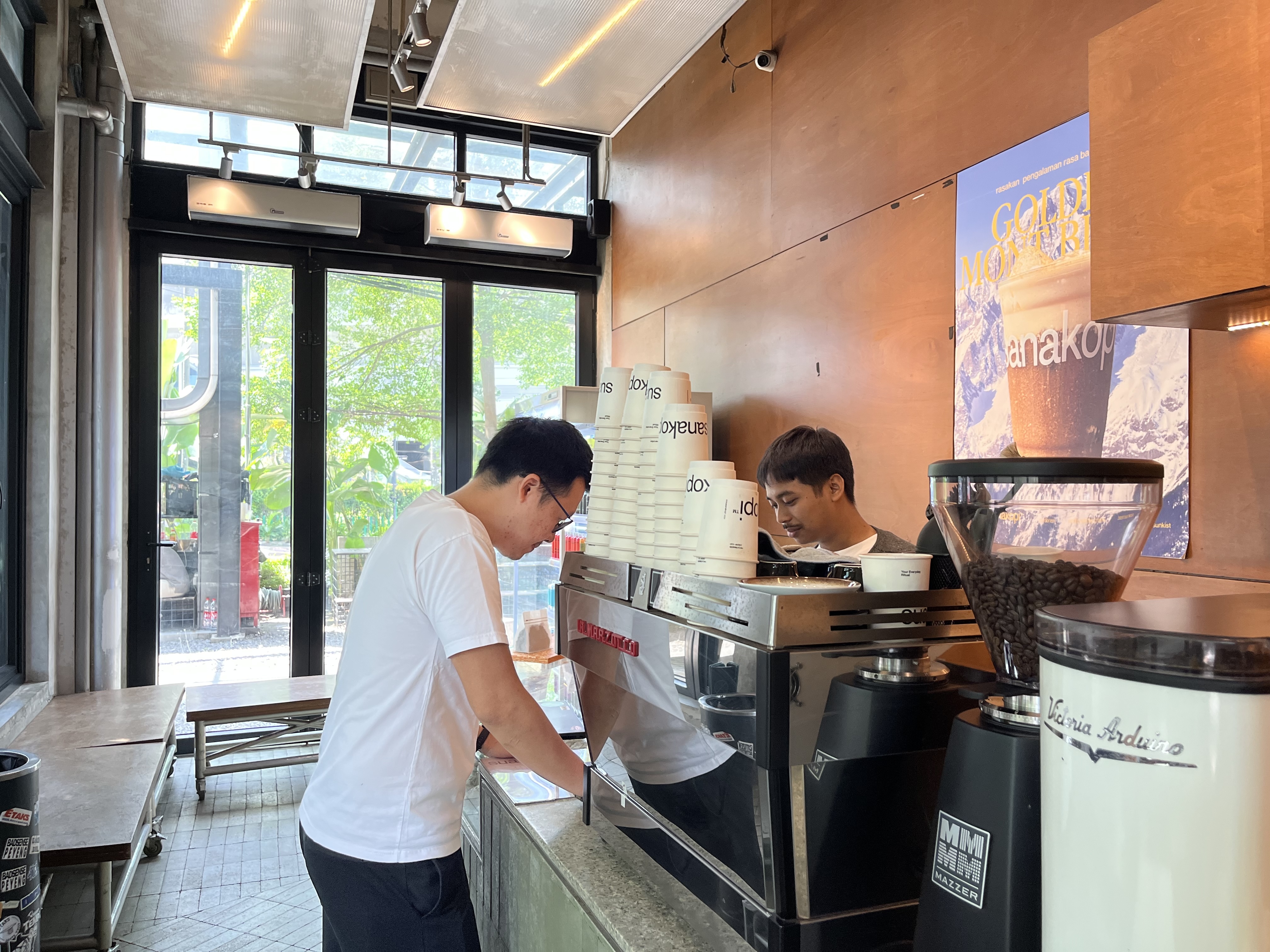
Offline experiences built the business. But in the era of instant verification, digital consistency is what keeps the door open.
We keep hearing the same story from people running businesses mainly offline. The food or service is excellent. The hospitality is warm. Regulars keep returning and telling their friends. Yet attracting new customers somehow feels harder than it used to.
If we personally reflect on our own behavior, we already know why.
Someone recommended a new place: “Coba deh, enak banget.” Ten years ago, that might have been enough to make us go. Now, we open Google Maps, check the rating, skim a few reviews, and glance at the photos. Only then do we decide.
It happens too quickly to feel like an extra step, but it increasingly decides who gets through the door.
Recommendation used to be the finish line. Today, it is just the starting gun.
—
In Indonesia, trusted recommendations remain powerful. But their role has changed. Instead of closing the decision, they now trigger a short investigation that moves through three layers.
It starts somewhere private: a WhatsApp message, family group chat, or “eh, cobain deh.”
It then moves to a public check: ratings, photos, and social reviews. Nearly six in ten Indonesians now use social media as their primary tool for researching a business before visiting.
A third layer is emerging: AI recommendations. Instead of scrolling through results, people increasingly ask ChatGPT or Gemini the question they might once have asked a friend.
Across these layers, one thing determines whether a recommendation holds up: digital consistency.
This does not simply mean using the same logo or posting regularly. It means that a business’s facts and identity remain clear wherever customers encounter it online.
Its name, address, operating hours, menu, prices, and contact details should match across platforms. So should the larger story: what the business offers, what it is known for, and who it is relevant to. Its website, Google profile, social content, reviews, and directory listings should all reinforce the same recognizable picture.
When different platforms tell different stories, customers are left to decide which version to trust. Search and AI engines face the same problem.
—
This helps explain why a business can have an active social presence and a Google rating above four, yet still feel invisible.
Traditional search was like browsing a supermarket shelf. Asking an AI tool is more like asking a well-read friend who names two or three places and stops there.
What makes that AI friend confident enough to mention a business is whether its digital footprint consistently confirms the same facts, attributes, and reputation. Contradictions create uncertainty, and an uncertain algorithm may recommend a business whose story is easier to verify.
Specificity also matters. “An Italian restaurant” may be accurate, but “a wood-fired Neapolitan pizzeria in Senopati” gives customers and algorithms a clearer understanding of when to recommend it.
—
What we see as an opportunity for business owners, including many of our partners, is that only few businesses have caught up. Google’s 2025 report shows that while nearly 80% of Indonesian digital users interact with AI daily, fewer than one in ten small and medium businesses have optimized their presence for AI search.
Improving digital consistency does not require a large marketing team. Start by asking yourself three questions:
Because what we believe, unforgettable physical experiences have not lost their magic. But hospitality simply starts earlier now, when someone first sees your business’s name on a screen.


.svg)